WELCO METOT HENEX TLEVEL - Double Switch


Publisher: Digital Pictures Developer: Digital Pictures Released: 1993
Double Switch basically feels like Digital Pictures returning to the well. Night Trap was pretty much the game that put Digital Pictures on the map – for better or worse – and Double Switch seems like an attempt to emulatethat sort of campy, trap-em-all formula.
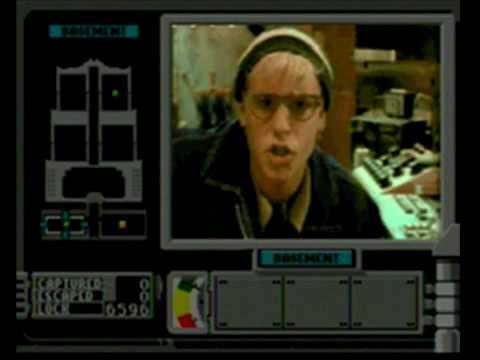
Welcome to Edward Arms. You are... well, I'm not sure, actually. You are the stranger that the owner of Edward Arms (Eddie, 'natch) has conscripted to help him escape from his basement prison. See, for some reason, Eddie has been locked in the basement of his own building by the handyman, Lyle. To make matters even more confusing, the building is being overrun by secret agents and assassins. Eddie, who seems to suffer from a pretty unhealthy case of paranoia, equipped the building with a series of cameras and traps before he was confined to the basement.
Now it's your job to keep the rest of Edward Arms' tenants safe by trapping intruders, as well as to find the various codes needed to free Eddie from his basement prison. You do this by jumping from room to room, arming traps, and then springing them at the precise moment an enemy passes over a trigger point.
Yeah. This is Night Trap.
Trap the assassins/agents/whoever and you're rewarded with a quick (and sometimes hilarious) scene of the results. Miss too many of these antagonists, or let one of them get to the circuit breaker and shut down power to the building, and you lose.

This game, to me, is pretty much the ultimate Digital Pictures title. Not only is it exactly the kind of linear, b-movie-level FMV experience the company was known for, but it also seems to be the pinnacle of their story-telling ability. Not to mention it features probably the biggest names a Digital Pictures game had ever drawn or would draw again.
Eddie himself is played by none other than '80s teen hearthrob Cory Haim. This was during the post-rehab, straight-to-video phase of his destroyed career. But still, most of the people playing this game had fond memories of The Lost Boys, so his name still carried a bit of weight.
The building manager is played by Deborah “Blondie” Harry. Perhaps a bit old for most of the audience who were likely playing this game. But seriously, who hadn't heard Heart of Glass?
Finally, the antagonist Lyle is played by R. Lee Ermey – better known to oldsters as the hard-as-nails Gunnery Sergeant Hartman from Full Metal Jacket, and to youngsters as “Sarge” the plastic army man from the Toy Story movies.

OK, so it's not like any of these folks were burning up the red carpet in 1993. But they were still pretty big names to appear in a video game. This is back when this stuff was mostly still considered child's play, remember.
The story, as well, is not bad in that the writers spend the first part of the game convincing you that Eddie is the protagonist. As the game progresses, it becomes obvious that Eddie is actually insane, and he eventually becomes the main antagonist of the story. It's also well-hidden that Lyle and the building manager Elizabeth are Eddie's parents.
The crew has a bit of cred, too. Especially director Mary Lambert, who has a handful of popular music videos to her credit, not to mention the movie adaptation of Stephen King's Pet Sematary.
As much as we all like to look back at the folly of the full-motion-video games and shake our heads in disbelief that they were once considered the future of our beloved hobby, there was a time when this stuff was right on the cusp of becoming the next big thing. The genre was being noticed by people outside the gaming industry. Double Switch seems like one of the titles that was just about “there” in that regard, though it wasn't enough to help the genre break through and become a mainstay.