WELCO METOT HENEX TLEVEL - Ecco the Dolphin


Publisher: Sega Developer: Novotrade Release: 1993
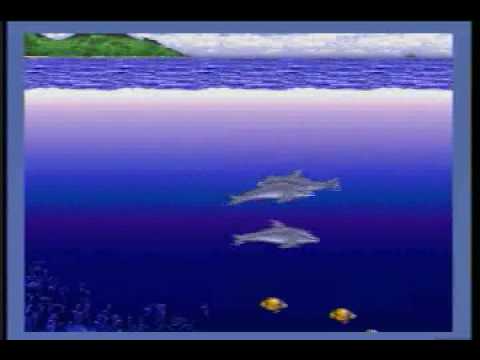
Ecco the Dolphin is one of the games that defined Sega and the Genesis back in the '90s. As crazy as an adventure game starring a dolphin sounds nowadays, it was doubly so back when Ecco was first announced. But when people actually got their hands on it, the game proved itself to be worthy of all the praise it got. It was nice to look at, featured beautiful animation, it was supremely challenging, and decidedly original.
Well, despite the whole Star Trek IV vibe.
Ecco is the story of a bottlenose dolphin – a dolphin with star-shaped markings on his forehead (in the shape of the big dipper, it appears). The game starts in a shallow pool where Ecco is swimming and jumping with other dolphins (his “pod”). As Ecco leaps high into the air, suddenly a vortex appears, sucking all the life out of the water. Ecco finds himself alone and in search of his missing pod. The adventure that follows takes him from the pool to caves deep below the sea, the open ocean to the frozen northern waters, the lost city of Atlantis, 65,000,000,000 years into the past, and finally to space.
Yeah. Things get pretty crazy.
That was the cool surprise awaiting those that invested a bit of time into Ecco back in the day. We were actually playing a science fiction game, though that wasn't made clear until well into the experience. What starts as a simple tale of a dolphin searching for his lost pod morphs into a dolphin learning his destiny as the saviour of the waters and the world – battling alien life forms by utilizing ancient technology.

All of this is done through surprisingly simple controls. Ecco can move in any direction and jump out of the water whenever he likes. He can fire a sonar wave to speak to other seaborne mammals as well as bounce it back to give himself a detailed look at the surrounding area. He can accelerate to a faster speed to swim against currents or jump high out of the water. And he can charge enemies using his nose as a ramming weapon (he also uses this technique to break certain items as well as restore health by feeding on schools of fish).
Ecco is essentially a puzzle game with a heaping helping of exploration. There are so many underwater nooks and crannies to explore that it's easy to get lost in it all. And that's a dangerous thing, as Ecco constantly needs to replenish his air supply by surfacing or finding air pockets deep below the waves. It's a great, natural “time limit” that doesn't feel like a hamfisted play mechanic thanks to the nature of the main character.
It's also one of the most difficult games I've ever played. It requires very accurate movements at times, and is extremely unforgiving. It's so easy to run out of air, or be overwhelmed by schools of jellyfish or roaming sharks or atlantean booby-traps that it's pretty common for most players to just give up entirely. But the payoff is definitey worthwhile, if only to see how insane the story gets.
Not to mention the fantastic atmosphere of it all. The Sega CD version in particular achieves this through a combination of the already-great graphics and a brilliant, haunting redbook soundtrack by Spencer Nilsen. This is one of the best video game soundtracks of all time.

Other than that, though, the Sega CD version of Ecco the Dolphin brings very little to the table over its cartridge-based predecessor. Some levels have been reworked here, and some of the glyphs accessed later in the game feature National Geographic-style video documentaries on dolphins (it doesn't necessarily fit the vibe of the game, but it's cool when you discover it for the first time), and that's about it.
Ecco the Dolphin is probably the most well-known game from Novotrade, which was a Hungarian developer that was pretty prolific over multiple generations of game hardware. It eventually became Appaloosa Interactive, and was based out of Palo Alto, California. Other games you may have heard of from them include the PS1 Contra games, Jaws Unleashed, Kolbri (the greatest hummingbird-based shooter of all time), Three Dirty Dwarves, and Tiny Tank.
The most famous name associated with the studio is Ed Annunziata, who is also credited on such games as Mr. Bones and Chakan: The Forever Man. He was also an Executive Producer for Nokia's N-Gage device. His game Smallball Baseball is credited as one of the first microtransation-based games in the US market.
So there.