WELCO METOT HENEX TLEVEL - Mickey Mania: The Timeless Adventures of Mickey Mouse

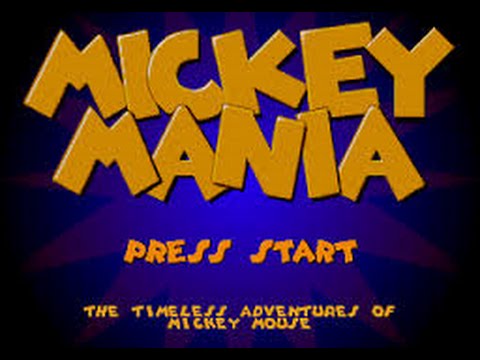

Publisher: Sony Imagesoft Developer: Traveller's Tales Released: 1994
During the late 80s, Capcom built a reputation for fantastic games based on Disney licenses, the mighty DuckTales for NES being the crown jewel. In the early 90s, Sega began building a similar reputation with titles like Castle of Illusion and Aladdin. Virgin took the baton from there and carried on producing solid games using the Aladdin engine - The Lion King, Pocahontas, The Jungle Book and Pinocchio.
Then there was Sony Imagesoft.
By 1994, Sony Imagesoft had forged a similarly strong reputation for producing absolutely terrible games, many of which resided on the Sega CD. Some of them were sort of groundbreaking, like using FMV backgrounds in a platformer with Bram Stoker’s Dracula. But pretty much everything the company produced was sub-standard.
Mickey Mania bucked that trend in a dramatic fashion. Originally intended as a celebration of Mickey’s 65th birthday in 1993, someone somewhere at Sony realized that they had a brilliant concept on their hands and pushed the game to a 1994 release. And boy was it the right call.
Mickey Mania is a mostly standard platform game, the type that we’d seen Mickey appear in before courtesy of Capcom and Sega. But it’s the brilliant premise that sets this game apart. As you might gather from the subhead, Mickey Mania is a trek through the mouse’s storied past, starting in the full-on black and white world of Steamboat Willie (Mickey’s first appearance in 1928) to his then most recent appearance in The Prince and the Pauper (1990). In between players got to navigate through worlds based on The Mad Doctor (1933), The Band Concert (1935), The Moose Hunters (1937), The Lonesome Ghosts (1937) and Mickey and the Beanstalk (1947).
Yeah, there’s a bit of a 30 year gap between the final two levels. Mickey’s transition to television in the 50s mostly featured re-releases of his theatrical shorts. He didn’t reappear in theatres until 1983’s Mickey’s Christmas Carol, and not again until 1990 with The Prince and the Pauper.
But enough about Mickey’s history. Mickey Mania is wonderfully experimental. The first level, for instance, starts out completely in black and white, gradually shifting to full color by the end. The Moose Hunters culminates with an into-the-screen style chase the likes of which Naughty Dog would use over and over again in games like Crash Bandicoot and Uncharted. In The Mad Doctor Mickey descends the outside of a tower using the same sort pseudo-3D effect seen in Castellan.

Really, the presentation in this game shines. Along with the distinctive backdrops for each level, the animation itself is just fantastic. Sega’s Aladdin had set a new bar for what could be done with game animation a year earlier by taking work directly from Disney animators and transferring it into a video game. The exact same thing was done with Mickey Mania, and the final results are stunning. Mickey’s movements are incredible, especially when you saw them for the first time in 1994.
And on the Sega CD version players were treated to loads of voice samples from Wayne Allwine himself (the official voice of Mickey Mouse from 1977 until his death in 2009) and a beautiful soundtrack augmented by work from Michael Giacchino. Giacchino’s credits include compositions for game series like Medal of Honor and Call of Duty, television shows such as Lost and Alias, and films like The Incredibles, Dawn of the Planet of the Apes and Up, for which he won an academy award. Oh, and he’s composed some of the music heard in Disney theme parks all over the world.
Fun and adorable side note: in 1991 the voice of Mickey, Wayne Allwine, married the voice of Minnie, Russi Taylor.

It has to be said, though, that Mickey Mania is a bit rough around the edges. The general gameplay and design is sound, but it suffers from somewhat sloppy collision detection and controls that can feel a bit mushy at times. It might be due to his fantastic animation, but sometimes Mickey just does not seem to respond to button commands fast enough. Due to these issues, later levels of Mickey Mania can be a bit tedious as you inch your way forward trying to avoid one cheap hit after another.
It seems like the shadow of Sony Imagesoft’s past weren’t shaken off completely with this game. But, to be fair, nothing here really ruins the experience outright.
Mickey Mania was released across the Sega CD, Genesis and SNES platforms, though the Sega CD is basically the best version of the game. The SNES version featured some load times, a missing level and some missing characters, while the Genesis cartridge obviously did not feature the fantastic redbook audio soundtrack.
Mickey Mania was re-released in UK and EU markets on the PlayStation in 1996. This version featured beautiful, redrawn backgrounds and sprites as well as the Sega CD soundtrack, but was still missing The Band Concert level that was also excised from the SNES version. It did, however, add some 3D elements and an appearance by Willie the Giant (who was not present in any of the 16-bit versions).

This marks the final time a game would be published under the name Sony Imagesoft, as it was folded into Sony Computer Entertainment of America as the company readied for the US launch of the PlayStation. Mickey Mania represents a fantastic example of Sony mostly shedding its reputation for producing terrible video games. It shows just the sort of quality the company was capable of and the resources it could bring to bear on game development.
Oh, and Mickey Mania also happens to be the design debut of a young developer by the name of David Jaffe.