WELCO METOT HENEX TLEVEL - Night Trap


Publisher: Sega Developer: Digital Pictures Released: 1992
On May 8, 1981, John Krizanc’s new play, Tamara, debuted in Trinity-Bellwoods Park, Toronto. The play is based on an historic meeting between Polish painter Tamara de Lempicka and Italian writer Gabriele D’Annunzio.
But Tamara wasn’t your run-of-the-mill production, where the audience sat in their seats while the story played itself out on stage. Tamara took place in a multi-room building, featuring as many as 11 different scenes happening simultaneously at some points. The audience mingles in with the actors, deciding which storyline they want to follow and moving from room to room with their selected character. Or maybe they would decide to stay in a single room to see what might happen next. This meant that it was impossible to see the entirety of the play in one viewing, but also meant that each audience member came away with a relatively unique experience and perspective on the story.
It was highly innovative to say the least. And in May, 1984, Tamara began a nine-year run at the American Legion Hall in Hollywood. Over a single weekend in 1985, Rob Fulop and Jim Riley attended the play three times, trying to piece together the entire story.
But Fulop and Riley weren’t just theatre buffs. They both worked for Axlon, one of a series of companies founded by Nolan Bushnell after leaving Atari. Axlon created, among other things, electronic toys such as AG Bear, which was a talking teddy bear that reacted to hearing people speak.

Axlon (and Hasbro, thanks to its $7 million investment) had created a new type of video game system, codenamed NEMO, which overlaid live video with more traditional video game graphics through a modified ColecoVision console with footage being fed by a VCR. But these were no ordinary video tapes - they contained computer data and multiple tracks of video that could be switched on the fly.
Tamara’s premise was perfect, and the idea morphed into one of the early demos for the new console - Scene of the Crime. One of three short demos that were completed and presented to Hasbro in 1986. From these, full development of what would become Night Trap and Sewer Shark was greenlit, and the crew got to work.

Diff’rent Strokes star Dana Plato would be the main character. Hollywood and Silicon Valley would collide to create one of the most groundbreaking video games in history. A three week shoot and what had to be one of the largest budgets in video game history up to that point was all it took.
With Night Trap and Sewer Shark in the can and the launch of the newly-named Control-Vision a mere three months from its late 1989 debut, Hasbro cancelled it all. The projected cost of the system would be $299, which was considered far too expensive to compete with the ridiculously successful Nintendo Entertainment System. Key members of the NEMO team, notably Tom Zito, purchased the rights to the software and put everything in storage.

Enter Sega. And Sony.
In 1990, Sony acquired the rights to the NEMO games, with intent to publish them on the planned Nintendo PlayStation. However, Nintendo famously flipped Sony the bird on that one and Sony was left with rights to a bunch of games they couldn’t publish. It just so happened that Tom Kalinske and Sega were also of the opinion that full-motion video games were the future, and with the US launch of the Sega CD set for late 1992, Sega and Sony entered into a publishing partnership, splitting the $5 million cost of updating Night Trap and Sewer Shark for release on modern consoles. The two publisher divvied up the games, with Sega publishing Night Trap as a first party launch title, while Sony would publish Sewer Shark as a launch title under its Imagesoft banner.

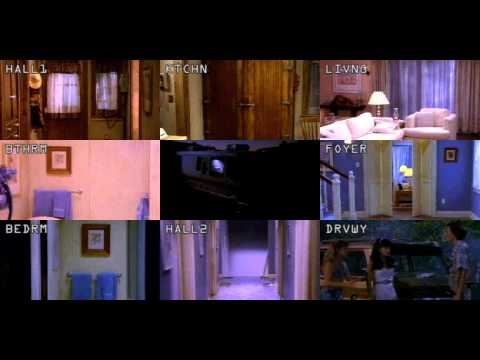
Playing Night Trap, it’s not hard to see its roots in Tamara. You are a member of the Sega Control Attack Team, investigating a mysterious house where a lot of young girls have recently gone missing. Your team has found a series of cameras and traps in the house, and has given you full control of them. SCAT’s undercover operative, Kelli (Plato) is joining a group of young women having a sleepover. It’s up to you to protect them and figure out exactly what the heck is going on here.
What follows is the best kind of B-movie trash, featuring vampires, terrible acting, and hilarious dialogue. Like in Tamara, you are in control of what parts of the game you watch. While you’re trying to follow the story, the house is being overrun by Augers - people who have been mostly drained by vampires but are still alive. You need to keep an eye on a series of rooms and try to capture as many of these shuffling terrors as possible. Trap enough of them and you get to the end game, where the Martin family is revealed to be vampires, and you must save Kelli and the remaining girls from their fates. Let too many “augs” go and you’ll get reamed out by the leader of SCAT, taken off the case and disconnected when he rips the cord out of a Genesis controller.

It’s a difficult game that really comes down to memorization (or taking pages of notes). As the Augers are not known to the girls or the Martin family, you almost never see them in any of the story scenes. So playing the game properly actually means ignoring most of the story. On top of that, at various points in the game the access color for the trap control will be changed. If you miss this scene, you might be completely out of luck, as these switches are the only random bit of the game. You never know which color control will switch to for sure.
Check out this video for an idea of just how much is going on in Night Trap. It shows all feeds running simultaneously for the entirety of the game.
All that said, Night Trap kind of felt like the future back in 1992. Those of us who played it could not believe what we were seeing. And while this isn’t how Hollywood and Silicon Valley ultimately came together, it definitely represented the first steps.
Sega’s decision to publish Night Trap rather than Sewer Shark would put it right in the center of a huge controversy. Concerns about violence in video games were rising, and 1993 brought Congressional hearings on video game violence. One particular scene in Night Trap, where one of the girls is attacked by three augers while wearing a tiny night gown was played over and over again. Night Trap, Lethal Enforcers and Mortal Kombat were all held up as examples of how the game industry had simply gone too far. The industry was warned to start policing itself, or the government would step in and do it.
Sega had already implemented a rating system on Genesis, Game Gear and Sega CD games by this point. This, along with the directive from Congress, directly led to the formation of the ESRB and the rating system we still have today.
Nonetheless, the whole thing ultimately resulted in Sega pulling Night Trap from shelves altogether. It was at that point that Digital Pictures, formed by Tom Zito and other key NEMO team members back in 1991, stepped in and self-published the game on the Sega CD, Sega CD 32X as well as the 3DO, Mac and PC. The updated versions featured bigger video windows, a slightly better map interface and a new intro that erased all mention of Sega or appearance of Genesis hardware.

Much like the play on which it is based, Night Trap was groundbreaking. It’s easy to laugh at the folly of FMV games today, but back in the late 80s and early 90s, many thought this would be the future. Sega was just one of the few companies actually in a position to pursue it. And every time you buy a video game and see that ESRB rating on the package, remember you have Night Trap to thank for it.